Operational Excellence. Engineered Into Your Organization.

Your Strategy Is Only as Good as the System That Executes It.

We embed a complete operational excellence methodology into your organization, connecting strategic decisions to process execution, competency readiness, and measurable outcomes. Not through consultants who leave. Through systems that stay.

Powered by SCOE Framework Strategic Comprehensive Operational Excellence
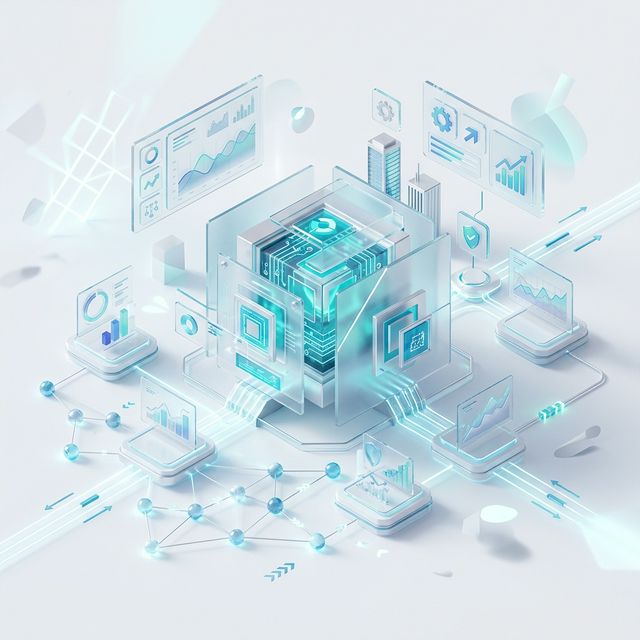
ASCEND technology visualization
The Reality

The Gap Between Boardroom Decisions and Operational Reality Is Costing You Billions

Most organizations have strategy documents. Most have KPIs. Most have project portfolios. What they don't have is a traceable chain connecting all of them: from the boardroom decision through the process that delivers it, measured by baselines that expose the truth, governed by systems that enforce accountability.

0
%
of business transformations fail to achieve their original ambitions
Bain & Company, 2024 (400+ executive survey)
0
%
of large-scale transformation efforts underperform against original goals
McKinsey Transformation Practice, 2019 to 2022
0
%
of strategies pass four or more of the "Ten Tests of Strategy"
McKinsey Strategy Survey, 2024 to 2025 (416 executives)

Invisible Process Debt

Undocumented workarounds, informal decisions nobody can trace, and manual patches accumulating silently across every department. Research shows 25% of operational effort is wasted on debt-caused rework. Most organizations don't even know they carry it.

Change Theater That Changes Nothing

Town halls, gamifications, awareness campaigns, and change agents consuming resources while the underlying system stays broken. Deming proved 85 to 94% of performance is determined by the system. Fix the system. The behavior follows.

Strategies That Die in PowerPoint

Strategic plans disconnected from operations. KPIs that measure activity, not outcomes. Benefits claimed but never verified against operational data. No mechanism to kill what isn't working, and zero accountability for those who override the evidence.

The SCOE Framework

From Strategic Vision to Process-Level Truth.
In One Traceable Chain.

SCOE is a 16-phase methodology that builds the complete operating architecture of an organization: from executive mandate through process baselines to a living PDCA cycle. It doesn't advise. It engineers. Every phase produces measurable outputs. Every output feeds the next. Phase 14 feeds back to Phase 1, making the entire framework a self-correcting system.

SCOE Framework visualization
Stage A

Strategic Architecture

Phases 1 to 4

  • Strategic Context & Environmental Scanning
  • Strategic Intent & Explicit Choices
  • Strategy Map with Cause-Effect Chains
  • Catchball (Hoshin Kanri Alignment)
Output: Testable strategic hypotheses with explicit choices, trade-offs, and cascaded targets negotiated through every organizational level.
Stage B

Operational Foundation

Phases 5 to 11

  • KPI Cascading & Strategic Alignment
  • Value Stream Mapping (VSM)
  • SIPOC & Process Ontological Dissection
  • Data & Information Flows
  • Skills, Competencies & People Readiness
  • Baselines, Thresholds & Measurement
  • Automation Assessment & Implementation
Output: The organization's operational truth. Every critical process mapped, every data flow documented, every competency gap quantified, every baseline established. This is where strategy stops being a document and starts being measurable.
Stage C

Living PDCA

Phases 12 to 14

  • Monitoring, Surveillance & Alert System
  • PICA, Incident Response & Corrective Actions
  • Feedback Loop, Evaluation & Continuous Improvement
Output: A self-correcting operational heartbeat. Threshold breaches trigger structured response. Root causes are logged as institutional memory. Phase 14 feeds back to Phase 1, so the system learns, recalibrates, and improves. Continuously.

OECF

The operational backbone: 11 components from executive mandate through automation, engineering the complete strategy-to-operations chain.

CECTF

Structural change enablement. Not workshops and town halls. Executive mandate, process redesign, technical support, system-generated monitoring, and fast feedback loops.

IRSAF

Embedded risk and sustainability governance that runs continuously alongside operations, not as a separate audit exercise.

Core Principles

01

Forced transparency: baselines from actual data, system-generated monitoring, single source of truth. The system makes dishonesty structurally expensive.

02

Structural change, following Deming's proof that 85 to 94% of performance is system-determined. Change the system. The behavior follows.

03

Fair enforcement: non-negotiable compliance with full technical enablement. The rules apply to everyone. What gets penalized is deliberate non-compliance, not performance that hasn't improved yet.

04

Fast feedback everywhere. The system detects, alerts, responds, evaluates, and improves in days and weeks, not quarters and years.

05

Mandatory sequencing: map it, measure it, stabilize it, THEN automate it. Automating a broken process just breaks it faster.

06

Living architecture. Every cycle updates strategic context, recalibrates targets, and refines the operating model. This is not a one-time exercise.

What We Solve

Nine Structural Problems We Solve.
With Systems, Not Slides.

Each value proposition here is backed by a specific SCOE mechanism. These aren't marketing claims. They are structural solutions embedded in our methodology and technology.

01

Making Process Debt Visible and Quantifiable

Every organization carries process debt: the accumulated cost of undocumented workarounds, informal decisions, and manual patches. Most don't even know they have it. Our SIPOC and Ontological Dissection makes the invisible visible, the vague quantifiable, and the tolerated intolerable.

02

Killing Vanity Metrics

If a KPI can't trace back to a strategic objective through a documented cause-effect chain, it's a vanity metric, and it's wasting your dashboard space. Our Strategy Maps and Catchball process ensure you measure what matters, not what's easy.

03

Exposing Silos and Ending Information Gatekeeping

Value Stream Mapping doesn't respect departmental boundaries. Data flow mapping reveals exactly who is blocking what, and makes gatekeeping permanently visible in the system. You can't hoard information when the data architecture shows the bottleneck is you.

04

Breaking the Repetition Cycle

Same problem, different quarter. Most root cause analysis stops at proximate causes. Ours traces through process design, data architecture, competency gaps, and baseline integrity simultaneously, then logs the finding as searchable institutional memory. The same root cause doesn't recur across the organization. That's not just investigation. That's institutional learning.

05

Evidence-Based Training Needs from Operational Reality

Your training plan should come from the gap between what the process requires and what your people can actually deliver. Not from a survey asking what workshops they want. StreamLine's competency-process alignment derives the training need from operational evidence: specific, targeted, and measurable to the process step.

06

Full-Stack Strategic Cascading

Most tools cascade goals. We cascade goals, processes, data requirements, competencies, AND baselines. Simultaneously, in one traceable chain. When a department head receives their targets, they also receive: the processes that drive them, the data needed to measure them, the competencies required to execute them, and the baselines that define normal.

07

Structural Change Enablement, Not Soft Change

We don't run awareness campaigns. We don't deploy change agents. We don't gamify adoption. We redesign the system so the new way is structurally easier than the old way, provide technical support, mandate through governance, monitor through system-generated data, and fix barriers through fast feedback loops. Culture is what emerges from consistently enforced, well-designed systems.

08

Preventing the Automation of Chaos

The most expensive digital transformation mistake? Automating a broken process. Our framework enforces mandatory sequencing: map it, measure it, stabilize it, prove it's stable with baseline data, THEN automate. No exceptions. No shortcuts.

09

Institutional Memory That Survives Personnel Changes

When your best process expert leaves, does the knowledge leave with them? In most organizations, yes. In ours, every process is documented in StreamLine, every lesson learned is logged in Ascend, every baseline is system-captured. The knowledge lives in the system, not in someone's head.

Our Differentiator

We Fix Systems, Not People

Conventional change management treats resistance as a psychological problem to be managed. We treat it as a rational response to a poorly designed system. When an employee "resists" a new process, we don't ask how to make them accept it. We ask: is the process well-designed? Does the employee have the tools, the data, the training, and the authority to execute it? If not, the resistance is the system's fault. Not theirs.

Conventional Change Management

Kotter / ADKAR
  • "Manage emotions" through awareness campaigns
  • Build "desire" through persuasion
  • Deploy change agents and town halls
  • Measure "change readiness" via surveys
  • Gamification for "engagement"
  • Culture as input to manage
VS

SCOE Structural Change

Deming's Principle
  • Redesign the process so the new way is easier
  • Provide technical support and tools
  • Mandate through governance with data backing
  • Monitor adoption through system-generated data
  • Fast feedback loops to fix structural barriers
  • Culture as emergent outcome of enforced systems

The Evidence Is Structural. Every High-Impact Factor Is a System Design Choice.

5.3×

When senior leaders physically role model. Not workshops, but visible executive action

5.8×

When CEOs communicate directly. Not HR cascades, but the CEO personally

3.9×

When initiative leaders are held structurally accountable through evaluations

3.8×

When clear roles are defined through organizational design, structurally

Source: McKinsey, "The science behind successful organizational transformations" (December 2021)

Our Technology

Three Applications. One Methodology.
The Honest Broker Your Organization Needs.

Each application serves a distinct layer of the SCOE framework. Standalone, each is a powerful tool. Together, they create something no single application can: an integrated system where strategic promises are independently verified against operational reality, and every governance decision is permanently accountable.

ASCEND product suite visualization
Coming Soon

ASCEND

The Methodology Engine & Transformation Hub

The SCOE methodology made operational. Maturity assessments calibrated to your reality. PDCA cycles with institutional memory. Governance that logs every decision and every override. Ascend is not a dashboard. Think of it as the organizational conscience.

  • Maturity Assessment Engine
  • Continuous Improvement Management
  • Governance & Compliance Engine
  • TMO Dashboard & Command Center
  • Lessons Learned Repository
Contact Us for Early Access
Live

Triple-P M

Strategic Portfolio Intelligence Platform

The strategic command center. Portfolio governance with kill criteria that fire automatically. Benefits realization verified against StreamLine's operational data, not self-reported by project teams. Strategy maps where every arrow is a testable hypothesis. Answers: "What should we invest in, why, and can we prove it's delivering?"

  • Executive Dashboard & Portfolio Intelligence
  • Strategy Map with Cause-Effect Visualization
  • Enterprise Risk Heat Map
  • Stakeholder & RACI Management
  • Project & Program Hierarchy
Explore Triple-P M →
Live

StreamLine

Enterprise Process & Value Stream Platform

The operational truth engine. Every critical process mapped through SIPOC with ontological depth. 22 KPIs measuring what actually happens, not what people claim happens. Competency gaps linked to specific process steps. It answers one question: "How do things actually work, and where exactly is the system failing?"

  • 9-Step SIPOC Analysis Wizard
  • Interactive Swimlane Diagrams
  • 22 Built-in Manufacturing KPIs
  • L0–L3 Process Hierarchy
  • Competency-Process Alignment
Explore StreamLine →

The Closed Loop

Triple-P M declares: "We approved Rp 50 billion for Initiative X with these kill criteria." StreamLine reports: "Process cycle time is 45 days against a 30-day baseline. Competency gap at 40%." Ascend concludes: "Synergy realization at 22% of target at Month 18. Root cause: fiber procurement bottleneck. Recommendation: trigger early strategic review."

The governance board evaluates against thresholds they themselves set. Whatever they decide is permanently logged. No one controls the narrative. The system does.

How We Engage

We Don't Pitch. We Diagnose.
You Decide.

Every engagement begins with your data, not our assumptions. Our tiered model ensures you see measurable value at each stage, starting with a free assessment that shows you what your organization looks like through the SCOE lens.

01

Discover

Free SCOE Maturity Diagnostic: 20 to 30 questions generating a scored report across five dimensions. Strategic alignment, process maturity, data readiness, people capability, and governance strength. Your gaps, quantified by your own answers.

Free
02

Diagnose

Complimentary facilitated workshop where our team uses Ascend's assessment tools to deliver a maturity baseline, gap analysis, and prioritized improvement roadmap. You get actionable intelligence. We get a deep understanding of your real challenges.

Complimentary
03

Deploy

Targeted solution deployment, addressing your most critical pain point with the right tool. Portfolio governance problems? Triple-P M. Process chaos? StreamLine. Transformation governance? Ascend.

Single Solution
04

Integrate

Multi-solution deployment that connects strategic and operational layers through Ascend's integration engine. Benefits verification across systems. Root cause tracing from strategic KPIs to process steps.

Integrated
05

Transform

The complete SCOE-powered operational excellence system. Full three-app integration, dedicated advisory, and the closed-loop governance that makes your organization a self-correcting system.

Enterprise
Academic Validation

Every Claim We Make Has a Source.
Every Source Is Verifiable.

Every phase of SCOE traces to established, internationally recognized bodies of knowledge.

ISO 9001 Quality Management
ISO 31000 Risk Management
ISO 56001 Innovation Management
ISO 38500 IT Governance

Kaplan & Norton

Balanced Scorecard, Harvard Business School. 247,000+ academic citations. The BSC alone has 7,700 global citations and 765+ peer-reviewed articles. Kaplan himself described the need for "a comprehensive closed-loop management system that links strategy and operations." That's exactly what SCOE delivers.

W. Edwards Deming

PDCA, System of Profound Knowledge. The father of quality management who rebuilt Japanese manufacturing.

Toyota / Lean

Hoshin Kanri, Toyota Production System. Validated by 11 Shingo Prizes and the Lean Enterprise Institute.

McKinsey & Bain

Transformation research and structural change multipliers, backed by decades of enterprise engagement data.

Six Sigma & DMAIC

Statistical process control and root cause analysis. Proven across manufacturing and services.

TOGAF & ITIL

Enterprise architecture and IT service management. Global standards for technology governance.

Get Started

See Your Organization Through the SCOE Lens. Free.

Request your complimentary SCOE Maturity Diagnostic. No commitment required. You'll receive a scored assessment across five operational dimensions, revealing where your organization actually stands against the framework that Fortune 500-grade research says determines success.

ASCEND Powered by SCOE Framework
Ricky Nuriadi and Partner, LLC Technology-Powered Management Consultancy